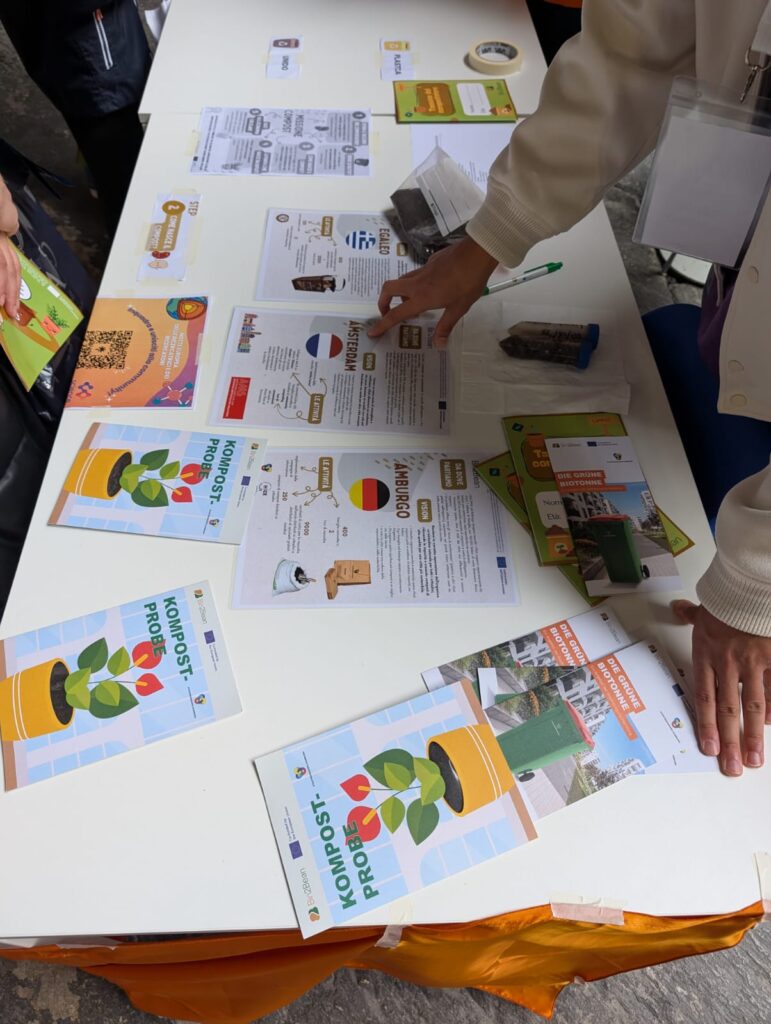
The Bin2Bean project was showcased at the European Researchers’ Night in Milan on Saturday, September 27th with the aim of bringing science and research closer to the public. We joined the initiative, organized by the project Co.Science in Piazza Duomo, with a stand organized and managed by Consorzio Italbiotec.
As one of the largest initiatives of its kind, the European Researchers’ Night offers an engaging space for dialogue, learning, and discovery, while highlighting how science and innovation contribute to improving everyday life and addressing global challenges.
At the Bin2Bean stand, visitors of all ages had the opportunity to discover how organic waste can be transformed into a valuable resource for soil health rather than being discarded. The interactive setup combined educational activities with fun experiences, helping participants understand the role of composting in the circular economy and its importance for sustainability.
A wide range of activities were offered throughout the day. The participants tested their waste-sorting skills, learning how to distinguish between different types of organic and non-organic waste. They were then introduced to the composting process, gaining hands-on knowledge about how green and brown biowaste is converted into nutrient-rich compost showcasing the urban initiatives of Hamburg, Amsterdam and Egaleo. To bring the concept even closer to everyday practice, participants were invited to plant their own seedling in a compost-based pot, an activity that not only connected theory with practice but also served as a personal reminder of the value of recycling organic materials. Around 100 participants actively joined the activities proposed.
At the end of the experience, each participant received a “Bioeconomy Expert” certificate, symbolizing their engagement and new awareness of sustainable practices. This small recognition carried a strong message: every individual has a role to play in building a greener, more circular future.
The enthusiastic participation of families, students, and professionals alike underlined the importance of education, interaction, and community involvement in driving the transition toward a circular and climate-resilient society.